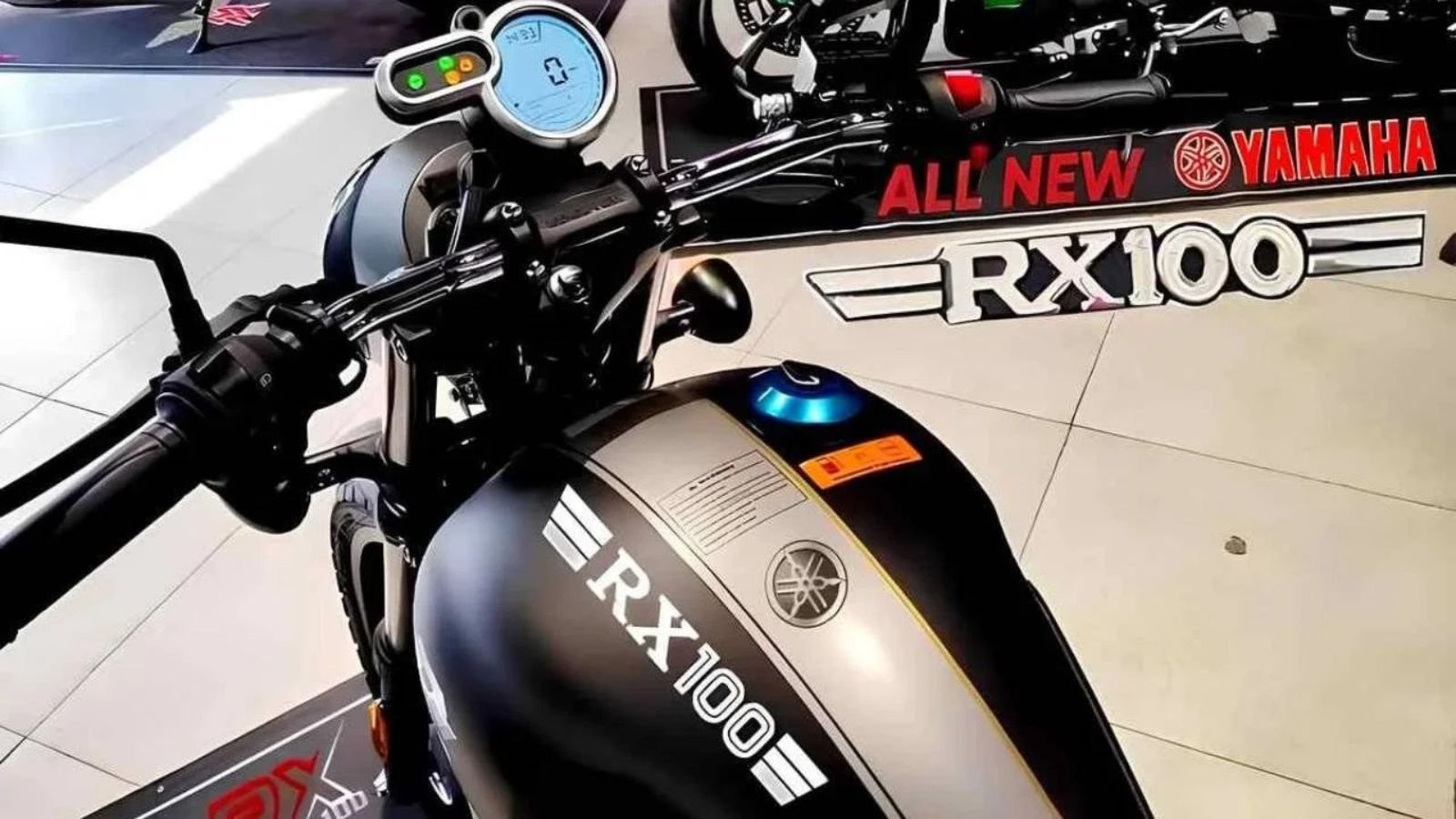

Few motorcycles in Indian history have achieved the legendary status of the Yamaha RX 100. It was never just a machine designed to commute from one place to another—it was an emotion, a lifestyle, and for many riders, their first taste of true motorcycling freedom. Launched during a time when motorcycles were mostly utilitarian, the Yamaha RX 100 broke conventions with its explosive performance, lightweight body, and unmistakable exhaust note that could be recognized from a distance.
Even decades after it disappeared from showrooms, the Yamaha RX 100 continues to live on through restored models, collector garages, and passionate conversations among motorcycle enthusiasts. Its cult following has only grown stronger with time, making it one of the most desirable vintage bikes in the country. As discussions around its possible return gain momentum, the Yamaha RX 100 once again finds itself at the center of attention, proving that legends never truly fade.
This article takes a deep dive into the history, design, performance, comfort, legacy, and future potential of the Yamaha RX 100, exploring why it remains one of the most celebrated motorcycles ever produced for Indian roads.
Yamaha RX 100 Overview
The Yamaha RX 100 entered the Indian market in the mid-1980s and immediately set itself apart. Built during an era dominated by fuel-efficient commuter bikes, it delivered something completely different—raw power, thrilling acceleration, and a riding experience that felt almost rebellious for its time.
Honda Activa 7G 2025: The Future-Ready Scooter with Style, Comfort, and Cutting-Edge Technology
Yamaha RX 100 Overview Table
| Aspect | Details |
|---|---|
| Engine | 98cc, Single-Cylinder, Two-Stroke |
| Power Output | 11 PS @ 7,500 rpm |
| Torque | 9.4 Nm |
| Transmission | 5-Speed Manual |
| Cooling System | Air-Cooled |
| Weight | Approx. 104 kg |
| Top Speed | Around 110 km/h |
| Brakes | Drum (Front & Rear) |
| Production Years | 1985–1996 |
The Yamaha RX 100 was never overloaded with features. Instead, it focused on delivering a pure, engaging riding experience—something modern motorcycles often struggle to replicate.
Design Philosophy: Simplicity That Became Iconic
The design of the Yamaha RX 100 was refreshingly simple, yet striking enough to leave a lasting impression. At a time when motorcycles followed conservative styling, the RX 100 stood out through its clean lines, compact proportions, and purposeful stance.
The round headlamp, flat seat, and curved fuel tank formed a timeless silhouette. Chrome accents on the exhaust and mirrors added a premium touch, while the minimal bodywork kept the motorcycle visually light and aggressive. The Yamaha RX 100 proved that great design does not need complexity—it needs character.
Even today, the RX 100’s design feels relevant. Its minimalism aligns perfectly with modern retro trends, which is why restored models continue to turn heads wherever they go.
Exterior Styling: Small Details, Big Impact
Every element of the Yamaha RX 100’s exterior served a purpose. The compact fuel tank allowed riders to grip the bike firmly, improving control during aggressive riding. The slim side panels contributed to its lightweight feel, while the upright handlebars offered a commanding riding posture.
The exposed mechanical components gave the bike an honest, raw appearance. Unlike modern motorcycles that hide everything under layers of plastic, the Yamaha RX 100 proudly displayed its engineering. This transparency helped build an emotional connection between rider and machine.

Its color options—ranging from classic black to bold red and blue—further enhanced its appeal. Combined with the signature exhaust note, the Yamaha RX 100 became instantly recognizable on Indian streets.
Engine and Performance: The Heart of the Legend
The biggest reason behind the Yamaha RX 100’s legendary status lies in its engine. The 98cc two-stroke motor was small in displacement but enormous in character. Producing 11 PS of power in a lightweight frame, it delivered acceleration that felt exhilarating, even by today’s standards.
Throttle response was instant, making the Yamaha RX 100 incredibly fun to ride in city traffic. The five-speed gearbox was smooth and precise, allowing riders to extract maximum performance from the engine. Whether launching from a traffic signal or overtaking on open roads, the RX 100 always felt eager.
Its top speed of around 110 km/h was remarkable for its time, especially considering its size. More importantly, it was the way the Yamaha RX 100 reached those speeds that made it special—quick, aggressive, and full of character.
Mileage and Real-World Efficiency
While performance was its highlight, the Yamaha RX 100 also offered reasonable efficiency for a two-stroke motorcycle. In real-world conditions, it delivered mileage figures of around 30–35 km/l, which was acceptable given its performance-oriented nature.
Riders were willing to compromise slightly on fuel efficiency in exchange for the thrill the Yamaha RX 100 provided. In fact, for many enthusiasts, the sound and acceleration were worth every extra drop of fuel.
Comfort and Ride Quality: Sporty Yet Practical
Despite its performance focus, the Yamaha RX 100 did not neglect rider comfort. The seat height was accessible, making it suitable for riders of different heights. The seating position struck a balance between sporty and relaxed, allowing comfortable rides during daily commutes.
The suspension setup, consisting of telescopic front forks and twin rear shock absorbers, handled Indian road conditions well. While not plush by modern standards, it offered enough stability and confidence to ride aggressively without feeling unsettled.
Its lightweight chassis played a major role in handling. The Yamaha RX 100 felt incredibly agile, allowing riders to weave through traffic effortlessly. Cornering was intuitive, and the bike responded immediately to rider inputs.
Safety and Braking Performance
Safety standards were simpler during the era of the Yamaha RX 100, but the bike still offered reliable control. Drum brakes at both ends provided adequate stopping power, especially considering the motorcycle’s low weight.
The predictable handling and strong engine braking helped riders maintain control even during spirited riding. While it lacked modern safety features, the Yamaha RX 100 relied on mechanical honesty and rider skill—a combination that appealed strongly to enthusiasts.
Cultural Impact and Cult Following
The Yamaha RX 100 was not just a motorcycle; it became a cultural phenomenon. It represented youth, rebellion, and independence during a time when personal mobility was evolving rapidly in India.

College students, racers, daily commuters, and enthusiasts all embraced the RX 100. It became a popular choice for modifications, drag races, and even professional motorsport. Its adaptability further strengthened its reputation.


Today, original Yamaha RX 100 units command premium prices in the used market. Well-maintained examples are often treated as collectibles, highlighting the bike’s lasting value and emotional appeal.
Yamaha RX 100 and the Modern Revival Discussion
With stricter emission norms ending two-stroke production, the Yamaha RX 100 eventually disappeared from showrooms. However, discussions about its revival continue to excite enthusiasts.
A modern Yamaha RX 100 would likely feature a four-stroke engine while retaining the original’s design essence. Advances in engineering could allow Yamaha to recreate the RX 100’s spirit while meeting current regulations.
If relaunched, the Yamaha RX 100 could appeal to nostalgic riders as well as younger audiences drawn to retro styling and lightweight performance.
Market Context and Competition
In today’s motorcycle market, retro-styled bikes have gained significant popularity. Models inspired by classic designs are selling well, proving that emotional appeal still matters.
A revived Yamaha RX 100 would compete with modern commuter-retro motorcycles, but its heritage gives it a unique advantage. Few names carry the weight and recognition that the Yamaha RX 100 does.
Buyer Profiles: Who Still Wants the RX 100?
The Yamaha RX 100 appeals to multiple buyer groups:
-
Riders who owned the original and want to relive the experience
-
Young enthusiasts fascinated by retro motorcycles
-
Collectors seeking iconic two-wheelers
-
Urban riders who value lightweight, engaging bikes

Its universal appeal ensures strong demand whenever the RX 100 is discussed.
Final Verdict: Why Yamaha RX 100 Remains Timeless
The Yamaha RX 100 is proof that true legends never fade. Its combination of lightweight design, thrilling performance, and emotional connection continues to resonate with riders across generations.
Even today, few motorcycles can match the raw excitement that the Yamaha RX 100 delivered. Whether through restored classics or hopes of a modern revival, its legacy remains stronger than ever.
Quick Recap – Why Yamaha RX 100 Is Still Loved
-
Iconic two-stroke performance
-
Lightweight and agile handling
-
Timeless minimalist design
-
Strong cultural and emotional connection
-
High resale and collector value
-
Legendary exhaust note
-
Simple, honest engineering
The Yamaha RX 100 is not just remembered—it is celebrated. And as long as riders value passion over numbers, this legendary motorcycle will continue to live on.